Orbid AI 對比 Claude:MedTech 應標場景
先做披露:本頁由 Orbid AI(原 MedStrato)撰寫,產品歸屬 Galaxias Inc.。這並非獨立實驗室評測。我們銷售的是 MedTech 投標智能體。但我們仍認為這些棧問題真實存在:Claude(以及現代 Claude 類 LLM 平台)在廠商投標台上擅長什麼、結構化系統主檔到底管什麼,以及買方應在哪些地方對我們的主張提出質疑。
給投標 / RA 負責人的底線結論
Claude 非常擅長長文件定向、審慎起草與結構化探索——尤其當你已在用 Projects、知識文件與工具連接器時。規格矩陣 + 多體系證據鏈 + 買方模板保真,通常仍需要帶持久對象與審閱狀態的系統主檔。
Orbid 是封裝該閉環的選項之一。能力強的團隊也可以自建,或使用其他工具。唯一有決定性的檢驗,是把同一份標書與同一份目錄,分別跑過你當前的最佳路徑(往往是 Claude 混合路徑),以及專用系統——並計量真實成本(含數據準備)。
相對 ChatGPT,Claude 常見優勢在長文件審慎起草、Projects/知識文件與偏保守、可複核的文風;這強化了混合路徑,並不能證明 Project 記錄就是投標系統主檔。
預約示範若你想對我們加壓驗證 · 更廣的棧總覽:通用大模型 vs 投標智能體 · 產品:orbid.dev · 經典 RFP 工具:對比 Loopio。
圖 A — 語言層 vs 結構化投標狀態(示意)
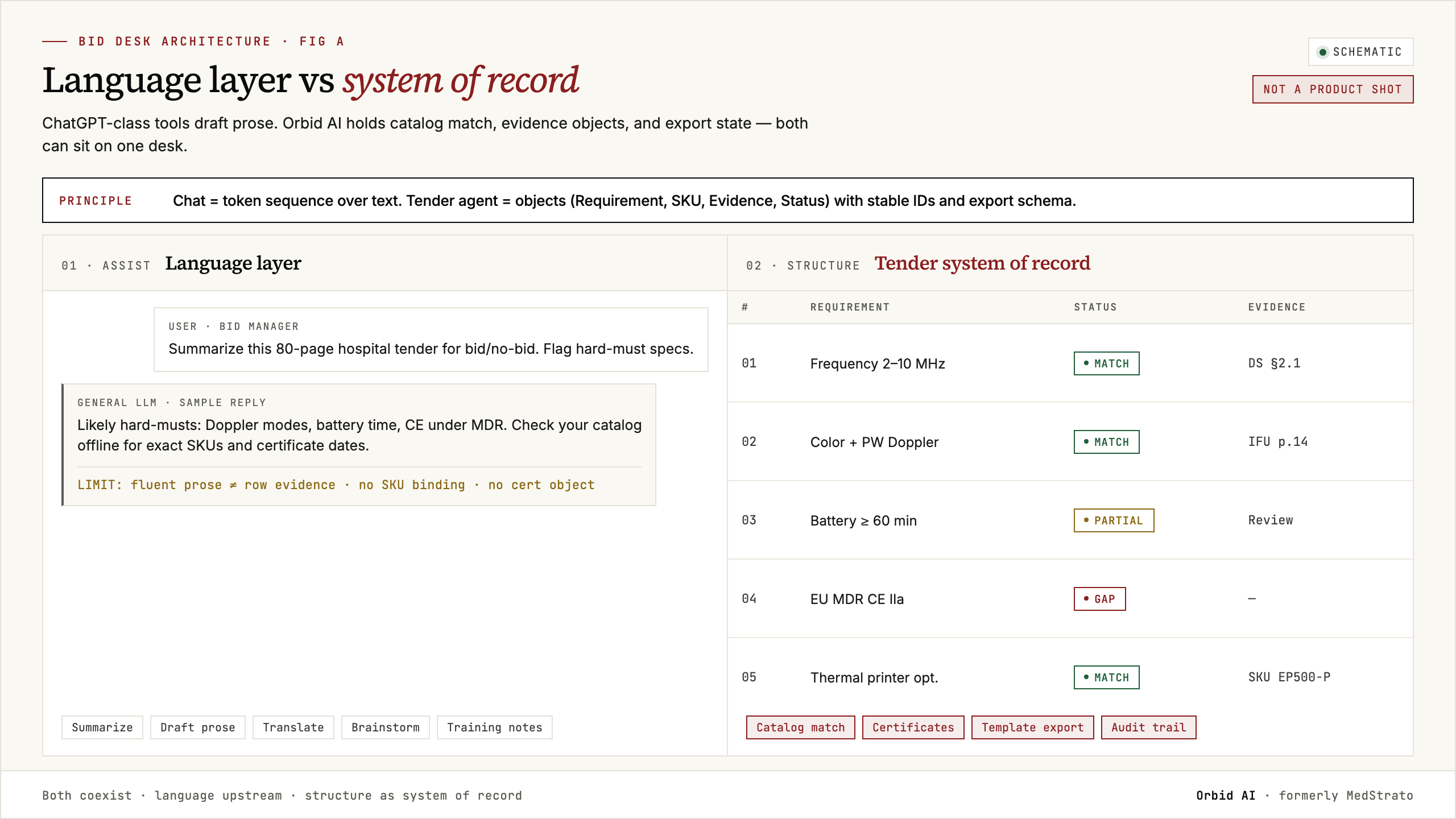
示意,不是產品截圖。有用的區分是狀態模型:會話 vs 持久投標對象——不是“AI 好 vs AI 壞”。
我們實際在比較什麼
真正重要的是三條路徑。混為一談,是營銷頁誤導讀者的常見手法。
| 路徑 | 通常是什麼 | 標籤的公平用法 |
|---|---|---|
| 業餘純聊天 | 把標書文本貼上消費級 Claude,指望模型記住 SKU 與證書 | 弱基線。嚴肅的 MedTech 投標台很少停在這裡。 |
| 現代 Claude 混合路徑 | Claude(團隊/企業)+ 長上下文 + Projects/知識文件 + 工具/連接器 + 自有目錄庫/表格 + Document AI + RA 閘門 | 任何垂直工具(含 Orbid)的真實競品。 |
| 專用投標系統 | 把目錄 + 證據 + 矩陣工作流 + 模板導出作為一等公民產品(Orbid、部分 RFP 平台,或內部自建) | 我們做的事。應比較總擁有成本與邊界場景,而不是口號。 |
早期供應商文案常只攻擊業餘路徑。那是假想敵論證。下文盡量避免。Claude 產品面已支持長上下文、多文件分析、結構化輸出、工具/API 與項目空間——把“只會貼上”當成對照,對嚴肅桌面不公平,也對我們自己的產品討論不誠實。
把三條路徑寫清楚,也是為了採購與 RA 在內部對齊語言。銷售說“我們用了 AI”,IT 可能聽到“又一個聊天機器人”,RA 聽到“又一個無法審計的黑箱”。對照評測時,請強制各方先在表格裡勾選:我們當前到底是業餘純聊天、現代混合,還是已有專用系統。選錯對照,結論會系統性失真。
對 Claude 而言,企業治理能力(工作區權限、保留策略、連接器範圍)會顯著改變混合路徑的上限。消費級賬號上的臨時貼上,與受 SSO 與 DLP 約束的企業租戶,不是同一風險面。評估 Orbid 時也請用同一安全問卷:數據駐留、子處理方、訓練政策、導出與刪除證明——不要只比較界面流暢度。
圖 B — 輔助、結構化、提交(運行模型)
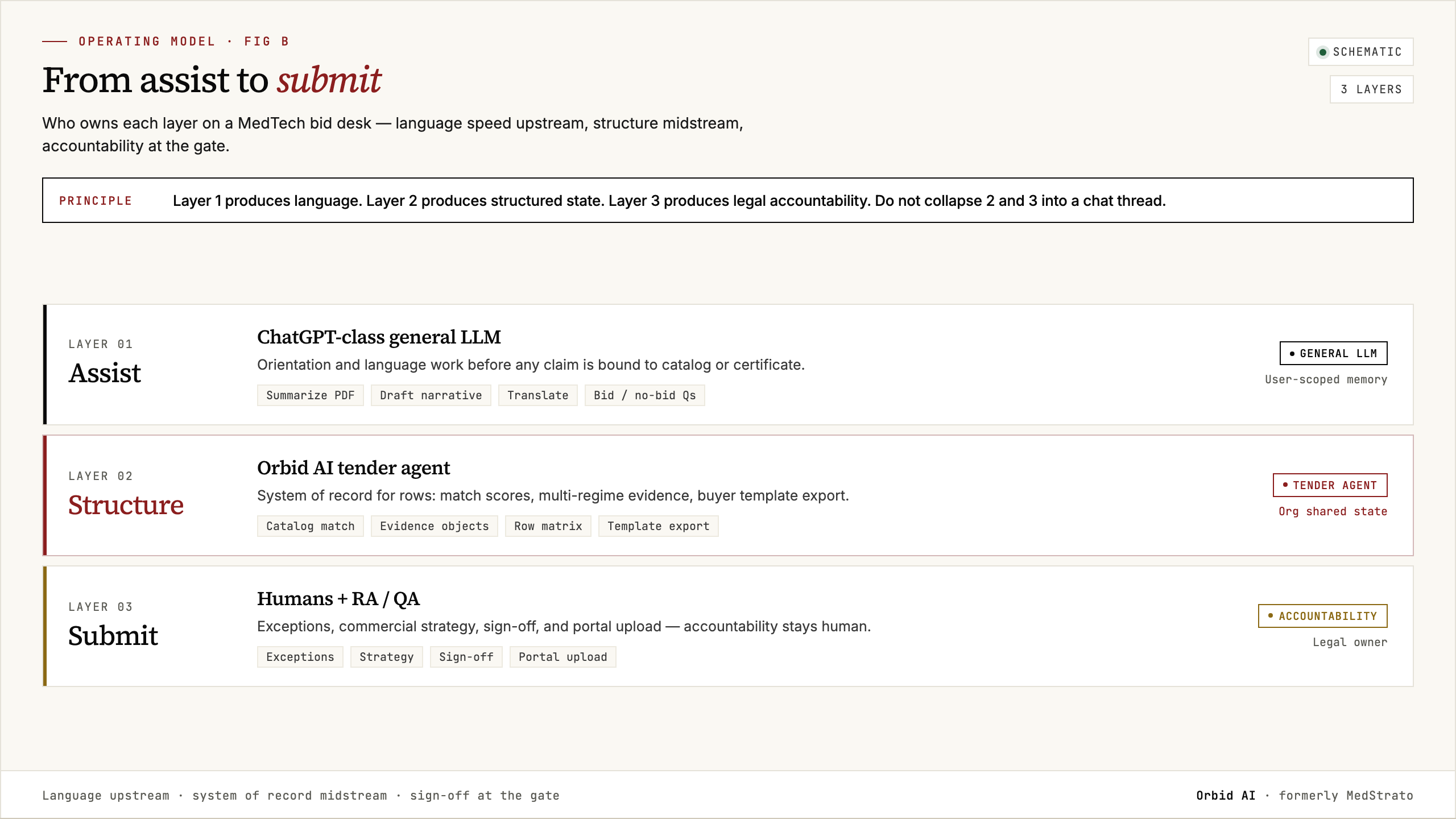
各層可以由不同工具擁有。把結構與法律責任塌縮進單一聊天線程,才是失敗模式——不是“用了 Claude”本身。
Claude 與 Claude 類通用大模型的強項
我們認同市場判斷:Claude 改變了許多桌面閲讀與起草厚標包的方式。
- 長文件定向 — 多文件招標 PDF、附件與多語言包的第一遍閲讀
- 審慎起草 — 封面信、非規格問答、內部簡報;文風常偏保守、可複核
- 探索 — 投/不投、評價標準走讀、給 RA 的例外表述框架
- 工作區能力 — Projects/知識文件、多文件上下文、結構化輸出、工具連接器與團隊策略控制
- 工程側粘合 — 有的團隊用 Claude 類工具輔助自建綁定器、解析或導出腳本;這是混合產能,不等於“Claude 就是 Orbid”
已經在跑 Document AI + 主數據 + 大模型 + RA 流程 的團隊,並不是“做錯了”。他們可能不需要我們。那是評估的合法結果,而不是我們必須用營銷話術否定的失敗。
語言層的強,不等於行級合規的強。投標台最貴的錯誤往往不是病句,而是:過期證書、錯誤 SKU、買方強制列為空、或把“部分滿足”寫成“完全滿足”。Claude 可以把這些錯誤寫得很自信;系統主檔的工作是讓錯誤變成可排隊的 partial/gap,而不是可轉發的漂亮段落。
若你的團隊已經用 Claude 生成“合規說明”草稿,請增加一道硬門檻:每一條涉及 510(k)、CE、MDR、UDI 或有效期的句子,必須能點回證據對象。做不到的句子不得進入導出。這道門檻可以用人工清單實現,也可以用軟件強制;Orbid 選擇後者作為產品預設。
純聊天仍會崩的地方——以及薄混合路徑仍會痛的地方
醫院與 GPO 器械標,往往取決於行級規格、跨監管體系證書鏈,以及買方模板保真度。封面信寫得好,很少是唯一得分項。
- 持久對象身份 — 需求行需要在重導出、審閱人與席位之間保持穩定 ID。聊天記錄很難替代“有記錄的矩陣”。
- 受治理的目錄真相 — 數值區間、選配碼與別名應屬於產品主數據,而不是某人上週二貼上的提示詞。
- 證據作為對象 — 清關編號、公告機構證書、有效期與頁碼引用應可連結、可核對。流利地說“我們有 CE”不是證據鏈。
- 模板投影 — 門戶對錯誤列的懲罰,通常比對不完美文筆更狠。
- 帶審批的機構記憶 — 已批准主張需要版本與共享。個人項目聊天幫助超級用戶,不會自動變成 RA 批准庫。
現代 LLM 平台可以在上述每一項中參與——若你的工程與流程粘合足夠強。問題很少是“模型能不能輸出一張表”,而是“誰在五十標/月規模下擁有維護、審計與失敗模式?”薄混合路徑(有知識庫、但沒有行級狀態與證書有效期對象)仍會在複審與門戶上載階段暴露成本。
一個可操作的自檢問題:當同一條規格行在三週後被第二個 RA 打開時,他能否不重讀聊天記錄,就看到綁定到哪個 SKU、證據對象指向哪份證書、誰在何時接受了 partial、以及導出列是否已就緒?如果答案依賴“去問某位超級用戶”或“在某個項目線程裡翻”,你擁有的仍是語言層,不是系統主檔。
另一個自檢:證書過期或標籤變更時,矩陣裡受影響的行會不會自動變紅、進入 gap/partial 隊列?若只能靠人工記得去改提示詞或重新上載知識文件,規模化風險會按標量線性放大。
圖 C — 目錄綁定(示意)
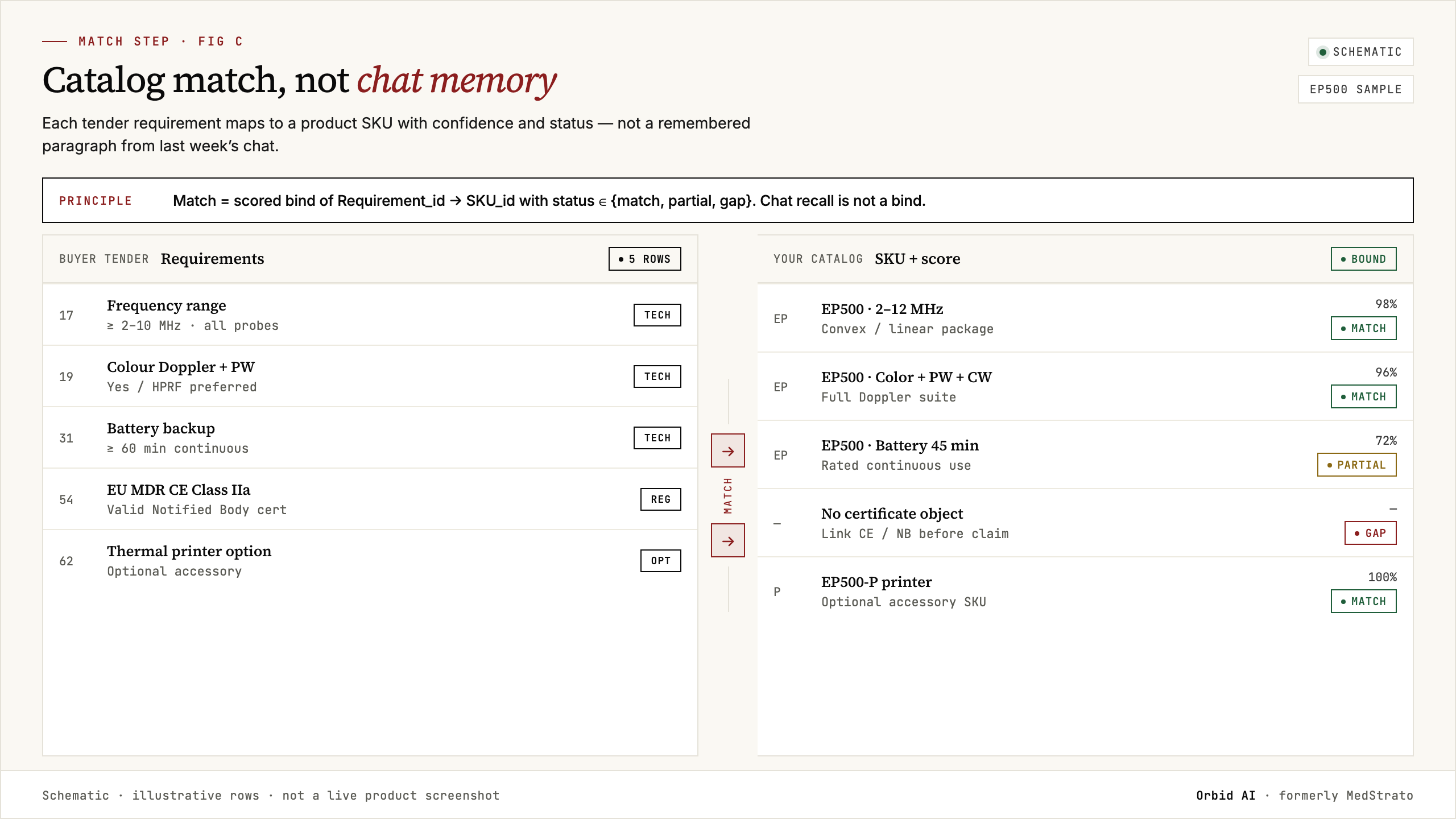
僅示意行。此處 match 表示對目錄 ID 的打分綁定——不是“模型聽起來很有把握”。
架構:有用模型,不是獨家發明
我們用四類對象描述投標工作。這是標準系統設計在招標場景的重述——不是隻有我們發現的秘密。
| 對象 | 角色 | 字段示例 |
|---|---|---|
| Requirement | 解析後的一條買方需求 | id、文本、類型、表/行、是否硬性、單位/區間 |
| SKU bind | 連結到目錄產品 | sku_id、置信度、狀態 |
| Evidence | 證書或來源文件 | 監管體系、文件類型、有效期、頁碼引用、已核實標誌 |
| Export row | 買方模板投影 | 應答、偏差、備註、就緒、簽署人 |
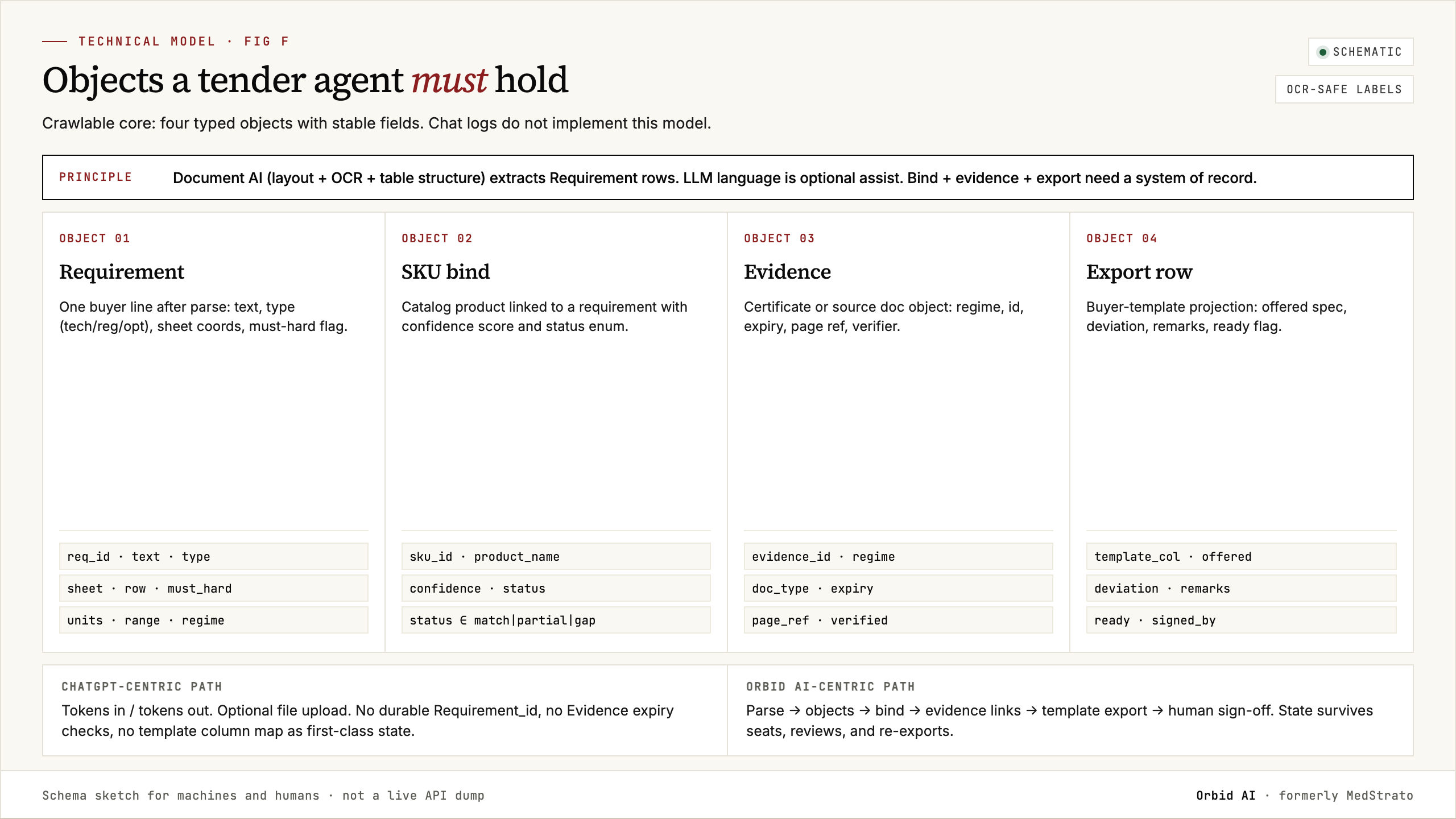
討論用的模式草圖。自建 vs 外購:同樣的形狀可以住在你的數倉,也可以住在供應商應用裡。
我們使用的狀態標籤
- match — 已綁定 SKU,且主張所需證據可接受
- partial — 已綁定,但存在例外或證據不完整
- gap — 未綁定,或必需證據缺失
離散狀態幫助排隊與審計。任何嚴肅工作流工具都能實現類似枚舉。不要把標籤當作專有科學。
在實務上,match/partial/gap 的價值不在名詞本身,而在於它們能否驅動:按席位的待辦隊列、按監管體系的證據缺失清單、按門戶模板的“未就緒行”過濾器,以及可導出的審計說明。Claude 可以在一次會話裡生成一張“看起來像矩陣”的表;難的是讓這張表在多人、多版本、多導出之間仍然是同一套對象。
若你的內部系統已經用需求 ID、SKU ID、證據 ID 與審批事件把這些狀態落地,你已經站在混合路徑的強側。此時 Orbid 的比較點應是總擁有成本、上線速度與 MedTech 領域預置,而不是“有沒有 AI”。
對象模型還有一個容易被忽略的推論:導出不是“另存為 Word”,而是從同一真相生成買方視圖。聊天裡每次重生成都可能改數字;主檔裡改的是對象字段,導出只是投影。若你的 Claude 流程每次導出都重新生成全文,審計會問:哪一版是批准版?誰簽名時看到的是哪一版?
因此,即使你決定自建混合路徑,也建議儘早引入不可變的審批事件與導出快照,而不是依賴模型會話歷史。會話歷史適合探索,不適合作為受監管投標的法律記錄。
Document AI 與 OCR——商品化入口,不是整條產品
版面感知解析(OCR + 表格 + 結構)已在雲廠商與開源棧中廣泛可得。只把 PDF“上載進聊天”當完整策略已經過時。能吐出需求行的入口只是入場券。
各方案仍會拉開差距的地方:
- 多工作表、髒包之後,行如何幹淨地變成持久 ID
- 目錄綁定如何處理單位、區間與別名
- 證據對象如何強制監管體系與有效期
- 導出如何命中這一家買方的列,而不靠人工重建
- 多席位審閱隊列與審計軌跡如何運作
Orbid 聚焦廠商投標台的這條閉環。Document AI 單獨 不等於受治理的投標系統主檔。
採購與 IT 評估時,建議把“解析準確率示範”與“對象生命週期示範”分開。前者用幾頁掃描件就能打動人;後者要看:重解析後 ID 是否穩定、人工改判是否留痕、證書輪換是否級聯、導出失敗時如何回滾到上一可提交版本。Claude 企業能力可以覆蓋部分解析與起草,但對象生命週期通常仍落在你們自建或第三方投標系統上。
也請區分“一次 demo 很驚豔”與“一季五十標可持續”。後者會暴露主數據治理、權限、區域駐留與供應商退出條款——這些很少出現在聊天產品的首頁賣點裡,卻決定 RA 是否敢把系統當作主檔。
圖 D — 作為系統主檔的矩陣(示意)
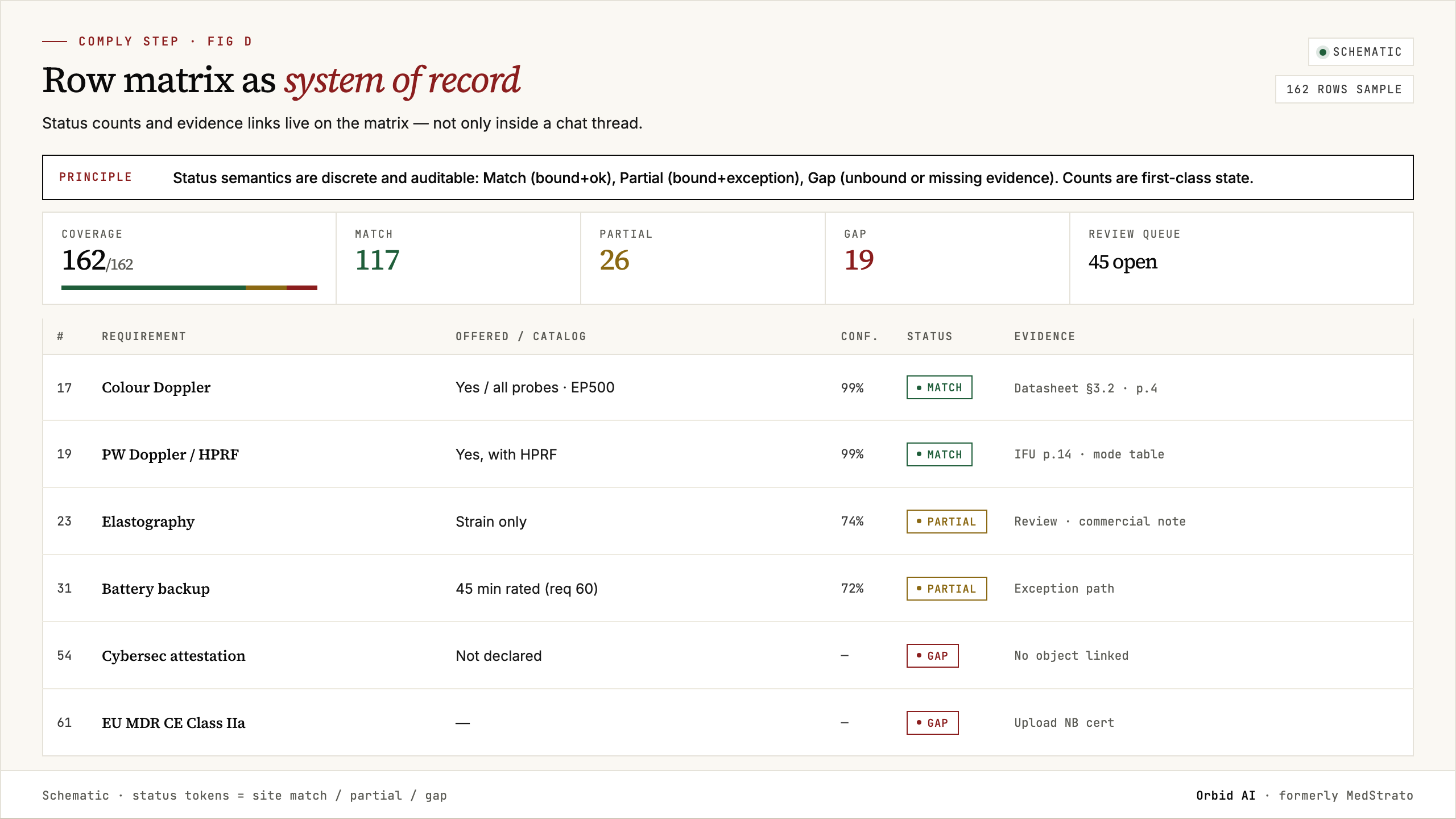
圖中計數僅為版面示意——不是來自貴司標書的已發佈基準。
圖 E — 導出投影(示意)
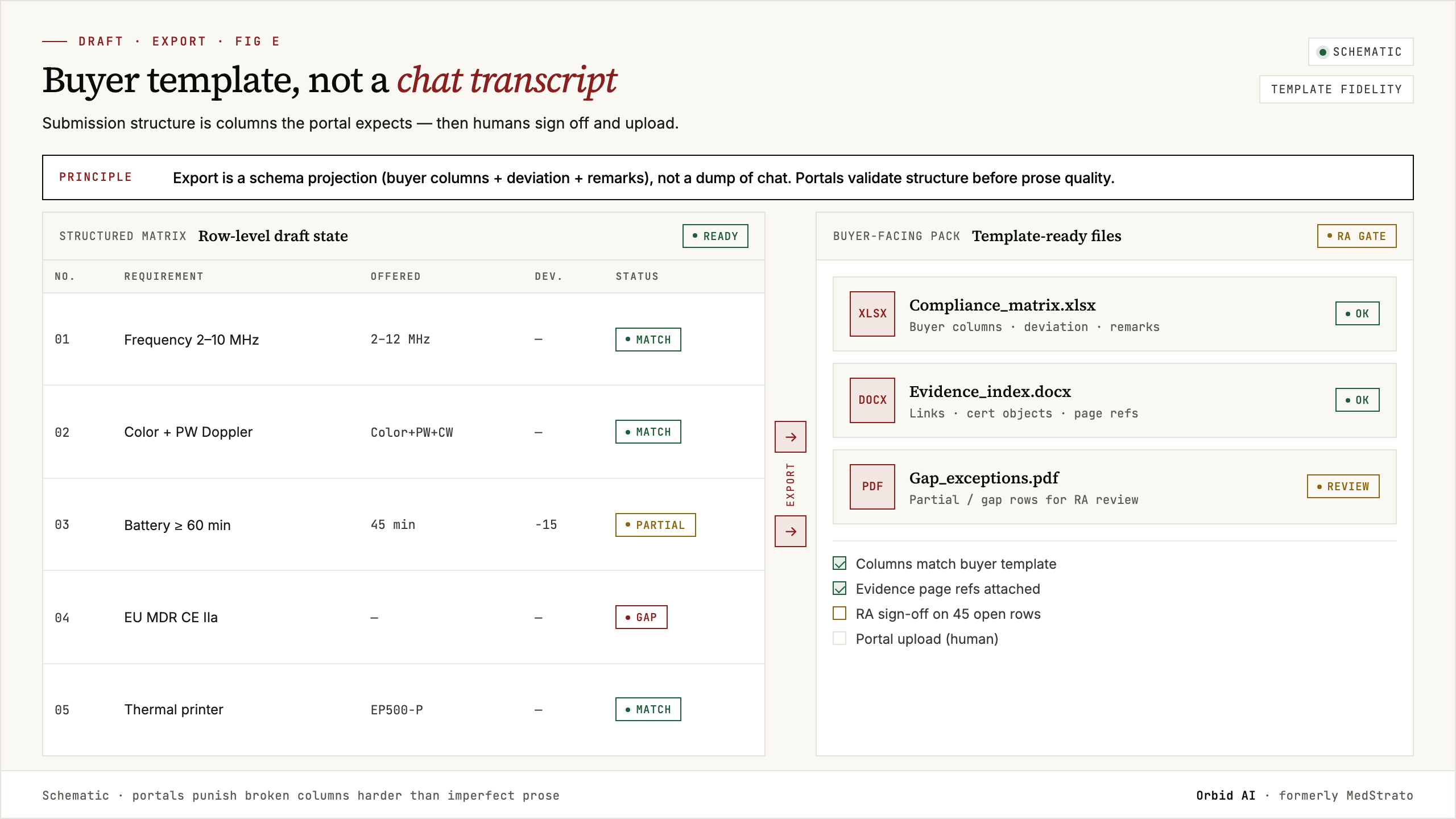
導出首先是結構。人仍擁有籤批與門戶上載。
Orbid AI 路徑——以及邊界(示範前請讀)
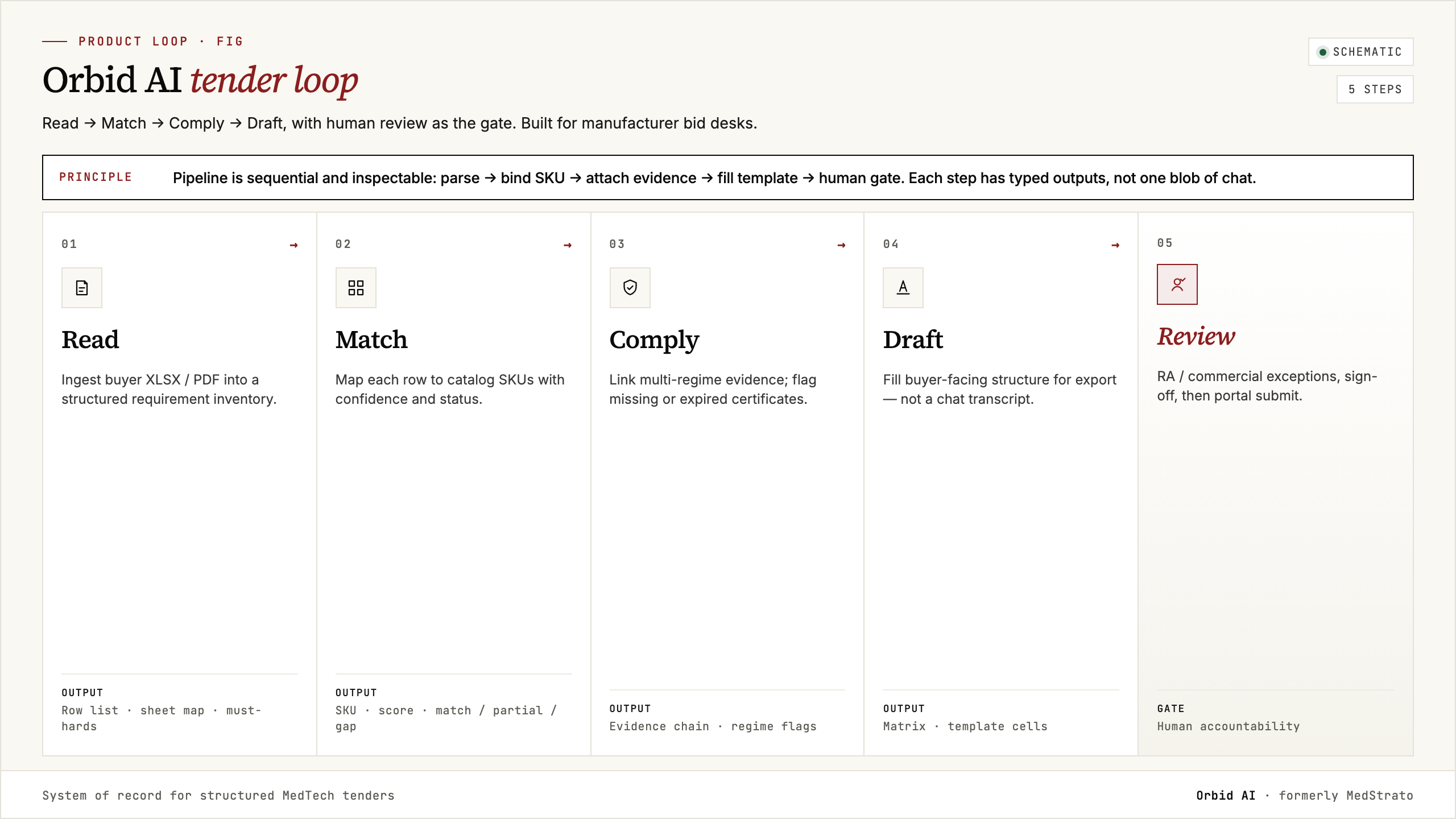
讀取 → 匹配 → 合規 → 起草,人類審閱為閘門。品牌說明:Orbid AI 原名 MedStrato。
我們優化的方向:
- 規格表沉重的結構化 MedTech 標書
- 帶審閱狀態的目錄驅動匹配
- 在數據已加載的前提下掛接多體系證據
- 面向買方模板、可供 RA 審閱的草稿導出
我們在本頁不聲稱:
- 對貴司組合的獨立、第三方審計精度或速度分數
- 使用 Orbid 即可消除監管風險或替代 RA/QA 判斷
- 定價策略、商務條款、關係歷史或敍事評價標準變得無關
- 每種標書格式、語言與門戶在第一天同等順滑
摩擦示例還可以加上跨法域時間線:同一器械在 FDA 與 EU MDR 下的文件集合不同,買方卻要求“一表填完”。混合路徑若沒有按監管體系拆分證據對象,模型很容易把美國清關敍述“平滑”成歐洲表述。專用系統同樣會失敗——如果證書數據沒加載——但失敗應表現為 gap,而不是流利的錯誤陳述。
對經銷/廠商協同投標,目錄所有權分裂是另一類摩擦:型號在廠家主數據正確,在本地報價單過時。Claude 無法知道哪份 Excel 是權威;系統主檔至少逼你選擇一個 authority 源。選擇本身就是治理工作,工具只能逼問,不能代替。
你應預留的成本與摩擦:
- 目錄與證書 onboarding — 髒主數據、變體與多體系包需要日曆時間;有的團隊要數週準備
- 持續維護 — 新 SKU、有效期輪換、標籤變更
- 數據敏感 — 完整技術文件與證書進入供應商系統,是安全與採購決策,不是免費預設
- 供應商鎖定與退出 — 依賴前先問清導出、數據所有權與並行運行
- 邊角案例 — 劣質掃描、模糊“等同於”表述、純商務行、敍事評分、非常規門戶、新興市場本地規則
- 總擁有成本 — 席位/用量價格只是一部分;計入流程變更與試點期雙軌運行舊路徑
- 變更管理 — 投標經理、RA、銷售運營對“誰擁有 partial 隊列”可能意見不一;工具換不掉職責模糊
- 多法人與多品牌目錄 — 集團內多主體應標時,SKU 與證書歸屬比單租戶示範更復雜
若試點只挑最乾淨的目錄與最整齊的 Excel 包,結果會系統性偏向任何結構化工具(包括我們)。請至少納入一份你“痛恨”的真實包:合併單元格、雙語混排、附件證書與正文不一致、買方列名一年一變。對照評測的目的是發現失敗模式,不是製造平滑曲線。
真實世界摩擦示例(非窮盡)
以下情況仍需要人類判斷。
- 模糊等同表述 — 買方寫“兼容現有 Model X 機隊”卻無數值區間或標準時,綁定置信度下降,行標為 partial。商務/RA 判斷仍必需——我們不會自動接受等同主張。
- 髒或多名稱目錄 — 同一 SKU 在不同市場有三個商品名時,匹配質量高度依賴試點前/中清理到什麼程度。我們暴露歧義,不會魔法解決未治理主數據。
- 敍事評價標準 — 如“供應商須展示臨牀領導力”或關係歷史,落在矩陣閉環之外。這些仍是大模型輔助 + 人工撰寫。
自建 vs 外購是開放的:能力強的團隊可以組裝 Document AI + 數據庫 + 大模型智能體 + 導出任務。Orbid 是給“想要閉環、不想自扛全部軟件 backlog”的投標台的封裝賭注。也請把我們與其他投標/RFP 軟件比較,而不只是和裸聊天窗口比較。通用 RFP 內容庫(如 Loopio 類)擅長可複用敍事問答;我們更側重規格重包上的 MedTech 目錄綁定與監管證據對象。工作不同——有時兩者同桌。
對已經深度使用 Claude 企業版的團隊,更具體的決策樹是:(1)你們是否已有可信的產品主數據與證書庫?(2)是否已有人擁有導出到買方模板的作業?(3)RA 是否要求按行的審批與審計?若三問皆“是”,混合路徑可能已足夠,Orbid 要證明的是更低維護或更快多體系覆蓋。若三問有二為“否”,繼續加提示詞通常只會提高流暢的錯誤率。
站點上其他位置若出現約 46 秒匹配週期或高匹配率等表述,請一律讀作內部/供應商自報基準,在貴司標書與目錄上覆測後再寫進採購材料。本頁不把這些數字當作對 Claude 的實驗室排名。
如何公平評估(用我們的對照評測思路反測我們)
我們建議一種方法。我們不會在本頁為你的數據交付已審計結果。
- 選一份你已跑過的100 行以上標書(中標或落標均可)。
- 凍結同一目錄樣本與同一截止時間。
- 跑你當前的最佳路徑(Excel、LLM 混合、其他軟件——你實際在用的)。
- 在相同輸入上跑 Orbid(或任何替代方案)。
- 用下列焦點評分——權重按你的流程調整。
建議評分焦點(權重按流程調整)
- 無支撐或證據薄弱的主張
- 你實際需要的監管體系下,缺失/過期證書
- 模板列破壞或被迫重建工作量
- 到首份 RA 可審草稿的日曆時間
- 首次 RA 通過後的返工量
- 準備/清洗目錄 + 證書數據的小時數(完整計入)
若你的混合棧已在這些指標上獲勝,請保留它。若 Orbid 只有在英雄式數據清洗後才贏,請把清洗算進成本。
建議把評分表列印或下載後,由投標與 RA 各填一列“可接受閾值”,再跑兩條路徑。避免事後用不同標準解釋結果。英文與中文評分表、CSV 見上;列含義一致,CSV 表頭保留英文以便工具導入。
示範議程若只有“看 AI 寫封面信”,會高估語言層、低估主檔層。請堅持把時間花在:同一行的證據跳轉、partial 隊列抽檢、導出列對齊、以及一份故意刁難的證書有效期案例。
評分時建議固定觀察者:同一個人分別記錄兩條路徑的“第一次可提交草稿”時間,避免不同記錄者標準漂移。再單獨記錄“目錄準備小時”——很多人把清洗主數據的時間算到工具頭上或完全不算,兩種做法都會扭曲 TCO。
若你願意公開內部結果(在 NDA 下),我們歡迎用你的對照評測挑戰我們的假設。我們更希望輸掉一場誠實的 bake-off,也不希望贏一場業餘純聊天的假想敵賽。
我們樂意在示範中現場跑你的包,並一起過 partial/gap 隊列。想先離線?用免費模板:英文列印評分表 · 中文評分表 · CSV。
何時以 Claude 優先(或以 LLM 混合優先)是理性的
- 你的 Claude Projects 與知識治理已覆蓋你關心主張的多席位審批
- 工作大多是敍事、培訓或內部分析
- 規格與證書已在可信系統主檔中
- 你有工程產能自維綁定 + 證據 + 導出
- 標量或組合複雜度不支撐再引入一個供應商
何時專用投標系統(含 Orbid)是理性選擇
- 中標取決於大型規格矩陣與多體系證據
- 模板保真與共享審閱隊列是慢性痛點
- 你想要面向 MedTech 的封裝工作流,而不是自研每一層
- 你接受 onboarding 與供應商盡職調查作為交易的一部分
從組織設計看,Claude 優先往往對應“強寫作、強分析、弱主數據”的團隊形態;專用系統優先往往對應“標量大、矩陣重、多監管、多席位”的形態。許多成長中的 APAC/EMEA 廠商會在兩者之間遷移:先用通用模型救命,再在輸掉幾次證書相關澄清後引入主檔。遷移本身不是失敗,失敗是遷移時不計量 onboarding 成本。
兩者並用,往往是更成熟的答案
讓通用大模型負責語言、探索與起草輔助。讓系統主檔——Orbid 或你的——負責目錄綁定、證據與導出。人保留策略與籤批。這不是騎牆;這是按工作匹配工具,而不假裝一個聊天窗口就是受監管的投標系統。
可執行的分工示例:商務在 Claude 中推演投/不投與競爭敍事;投標運營在系統主檔中維護行級 match/partial/gap;RA 只在 partial/gap 與高風險監管主張上深度介入;最終籤批仍走你們現有質量體系。Claude 可以繼續寫培訓紀要與澄清問題草稿,但不應成為證書編號的權威來源。
若組織禁止將技術文件發到外部模型,混合路徑還要加上私有化部署、數據駐留與提示日誌策略——這些約束對 Orbid 與對 Claude 企業版同樣適用,應在同一安全問卷裡比較,而不是隻比較文筆。
自動化閉環定義:MedTech 應標自動化。實施提綱:指南。兄弟篇:Orbid AI 對比 Claude、對比豆包、對比 Kimi,論證結構相同,模型側強項不同。
最後提醒採購委員會:要求供應商(包括我們)出示“獨立實驗室對貴司目錄的精度報告”是合理盡職調查;若對方只能出示營銷頁或未綁定你的數據的通用基準,請降權。本頁作為供應商解釋,最大用途是幫你設計一場公平的對照評測,而不是替你完成評測。
若評測後選擇繼續以 Claude 混合為主,請至少固化三份工件:目錄權威源說明、證書更新 RACI、買方模板導出檢查表。這三份工件能顯著降低“模型很強、流程很飄”的風險。若評測後選擇 Orbid 或同類專用系統,請把同一三份工件當作 onboarding 輸入,而不是上線後補作業。
對已經同時使用 Claude 與某種 RFP 庫的團隊:敍事庫解決“寫過的答案怎麼複用”,目錄/證據系統解決“這一行器械能不能應、憑什麼應”。兩者疊加時,注意避免雙源真理——同一主張不應在聊天草稿、RFP 庫與矩陣裡各寫一版而不互鏈。
品牌雙軌說明(避免檢索混淆):產品試用與代理敍事在 orbid.dev;長文指南與內容 SEO 亦可見於 medstrato.com。Orbid AI 即原 MedStrato 產品線,公司主體為 Galaxias Inc.。本頁所有“我們”均指該產品方,而非獨立媒體或檢測機構。
若你只讀一句話:把 Claude 當作強力語言層,把目錄綁定與證據對象當作必須有主人的系統主檔;再用同一份真實標書做 bake-off,而不是用博客結論代替你的數據。
本頁公開立場:我們賣專用投標智能體;我們同時承認現代 Claude 混合路徑是真實競品。讀者應用自己的標書與目錄裁決,而不是把供應商敍事當作客觀第三方結論。
想在自己的文件上加壓驗證差異?
預約示範——我們會與你一起跑真實標書,並共同審閱 match / partial / gap 隊列。把本頁每一項主張(包括我們的)當作假設,直到它在你的數據上成立。
功能 · 定價 · 產品試用 orbid.dev · 棧總覽:通用大模型 vs 投標智能體 · 對比 ChatGPT · 對比豆包 · 對比 Kimi。
Claude 混合桌的典型配置(公平描述)
Claude 類工作流常以 Projects / 知識文件為中心:標書 PDF 與附件進項目,歷史應答與 SOP 作知識,Artifacts 或結構化輸出生成表草稿,工具連接器偶爾接到內部 API。再配上主數據與 Document AI,就形成真實的 Claude 混合桌。它比「消費級貼上」強一個數量級;我們把它當作對照基線。
| 混合桌組件 | Claude 側常見形態 | 成功時的樣子 | 規模化易碎點 |
|---|---|---|---|
| 長材料閲讀 | 多文件 Project | 人快速建立標包地圖 | 項目記憶 ≠ 多標可審計的組織庫 |
| 謹慎起草 | 可審閱散文與表草稿 | RA 改稿成本低 | 表草稿無行級狀態機 |
| 結構化探索 | JSON/表形輸出、Artifacts | 便於二次處理 | 二次處理管道要自建與維護 |
| 工程膠水 | 協助寫解析/導出腳本 | 縮短內建時間 | 腳本所有權與測試責任在你 |
| 目錄與證書 | 外置庫 + 人工對賬 | 參數可核 | 別名與有效期治理仍是主戰場 |
| RA 閘門 | 會籤 / 工單 | 人最終負責 | partial 若只在對話裡,隊列會丟 |
Orbid 封裝的是矩陣記錄源與證據對象閉環;Claude 繼續做長材料與敍事通常更划算。作為供應商我們寫明:本頁非獨立評測;若 Claude 混合路徑在你的 100+ 行標上全面勝出,保留它是成熟答案。
Projects 很強時仍要分清的三件事
- 上下文窗口 ≠ 組織記憶 — 項目裡放得下本標材料,不等於跨標、跨席位、帶審批版本的主張庫。
- Artifacts 表 ≠ 矩陣狀態機 — 漂亮表可以是導出的中間態;match / partial / gap 與籤批歸屬仍需工作流。
- 工具調用 ≠ 受治理主數據 — 連接器能讀庫,不自動解決髒別名與證書輪換日曆。
示範與試點請追問:別名衝突如何暴露、證書風險窗如何入隊、買方改表後行 ID 是否穩定、partial 預設策略、退出導出與並行運行、數據駐留與刪除。把同一問題單問 Orbid 與你的 Claude 棧。
與 ChatGPT 頁的差異在哪裡
結構上本頁與 ChatGPT 對位文相同,因為對象模型與 bake-off 方法並不隨模型品牌改變。差異在產品面強調:Claude 的長上下文、Projects、謹慎行文與工程向膠水,使混合路徑更「像完整棧」。這提高了對 Orbid 的公平門檻——我們必須在目錄、證據、模板與隊列上證明封裝價值,而不能靠貶低 Claude。
針對 Claude 桌面,bake-off 請單獨記錄:Projects / 知識文件的準備小時、連接器範圍,以及這些工件是否被納入 RA 可審計範圍。許多團隊把“建好 Project”算成零成本,卻在覆盤時發現知識文件版本失控。
Claude 的長上下文會誘使人把整份證書包塞進會話。請仍要求:有效期與監管體系字段進入證據對象,而不是隻存在於某次 Project 附件列表。會話附件清單不等於證書庫。
若工程團隊用 Claude 生成內部綁定腳本,請把腳本與運行日誌納入變更控制;否則混合路徑的“隱性軟件”會變成無主的關鍵路徑,失敗時無人可追。