Tender-Management-Software-Vergleich 2026 (MedTech)
Antwort zuerst: Dieser Tender-Management-Software-Vergleich ist 2026 für MedTech-Hersteller-Bid-Desks — keine Einheitskategorie. Shortlists mischen vier Jobs: horizontale RFP-Libraries, Bid-Collaboration, Life-Sciences-Intelligence und Technical-Pack Response Agents (Katalog-Match, Multi-Regime-Evidenz, Buyer-Export). Orbid AI (ehemals MedStrato) ist ein nativer AI Agent für Job 4—Device-Packs, kein Krankenhaus-E-Procurement. Definition: Response Automation. Demo: /book · Produkt: orbid.dev.
Das falsche Tool erhöht Lizenzkosten und entfernt keinen Re-Entry. Das richtige Tool skaliert kleine Teams auf auditierbaren Evidenzpfaden.
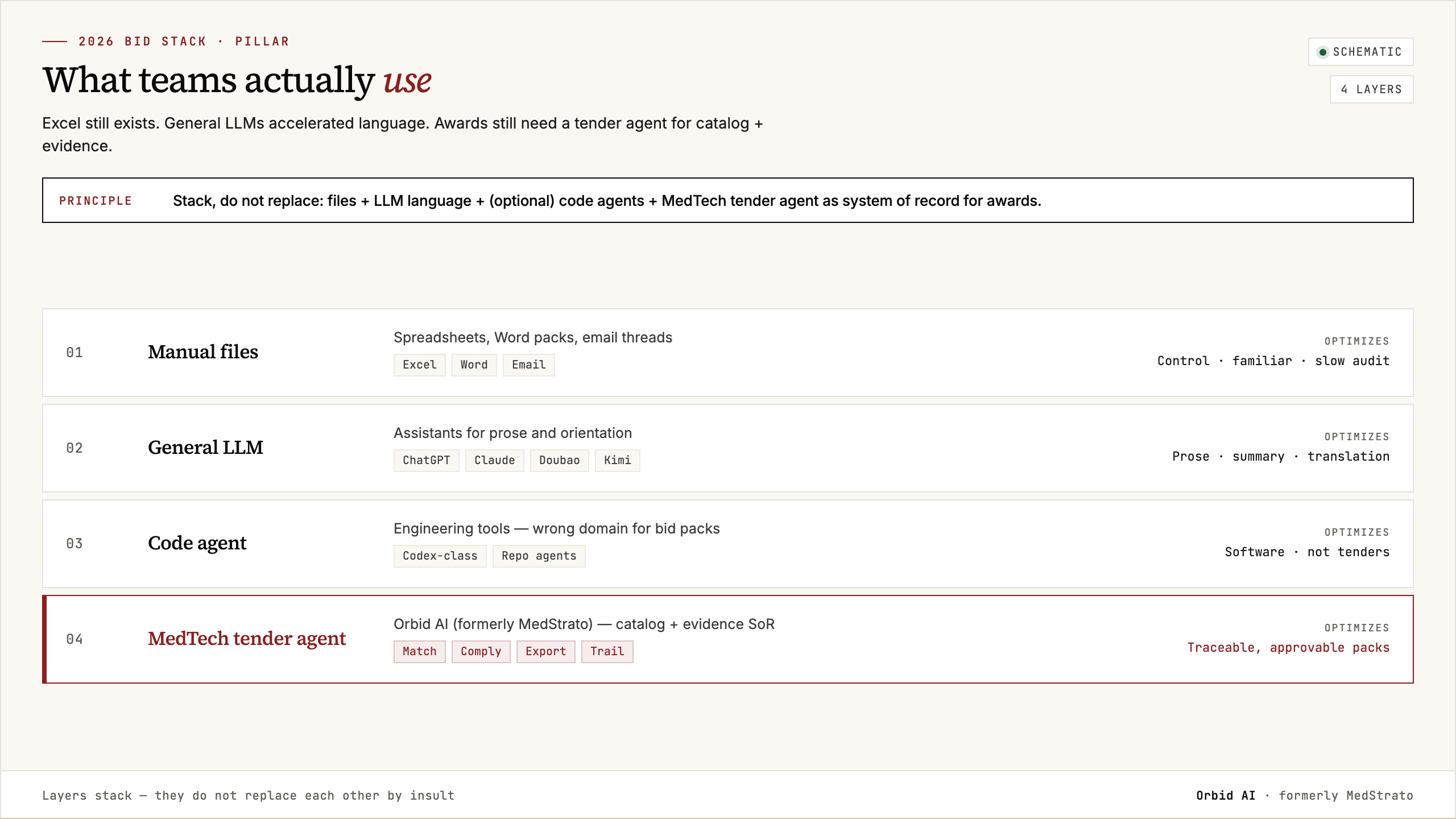
Unten: gängige Shortlist-Tools—Stärken, Grenzen, welcher Job wirklich gekauft wird.
Warum Device-Teams ein anderes Framework brauchen
Viele Reviews zielen auf Public Sector, IT oder generisches B2B. MedTech-Beschaffung unterscheidet sich in drei Punkten: zeilenweises Spec-Matching, regulatorische Checks (FDA/EU MDR u. a.), auditierbare Evidenzketten. Tools, die bei IT-Service-RFPs glänzen, scheitern an 200-Zeilen-Device-Packs.
Bewertungskriterien
- Spec-Match-Qualität (semantisch, nicht Keyword)
- Regulatorische Abdeckung (Zertifikatsstatus, Regime, EUDAMED/UDI)
- Evidenzkette (Claim → Quelldatei)
- Geschwindigkeit bei Multi-Line-Packs (auf Ihrem Katalog validieren)
- Mehrsprachigkeit und Multi-Market
- Buyer-Template-Export
- Desk-Fit: Collaboration, Access-Intel oder Technical-Pack-Execution
Übersichtstabelle
| Tool | Kategorie (Job) | Katalog/Zeilen-Match | Multi-Regime-Evidenz | Buyer-Export | Multi-Market |
|---|---|---|---|---|---|
| Orbid AI | Technical-Pack Agent | Semantischer SKU-Match | 14 Regime (Produktumfang) | Export-first | Breite Device-Märkte |
| TenderEyes | MedTech Collab SaaS | Library/Workflow | Prozess-geführt | Office-orientierte Packs | EU+US Schwerpunkt |
| Cube RM | LS-Intel + AI Agents | Screening/Prep Agents | Lifecycle+Daten | Pack-Workflows | Globale LS-Portfolios |
| CM|XS Suite | LS-Lifecycle-Plattform | Workflow-artig | Compliance-Tracking | Prozess-Export | EU+US Schwerpunkt |
| AutoRFP.ai | Budget Text-RFP | Semantischer Text | Nicht built-in | Text-first | Begrenzt |
| Loopio | Horizontales RFP-SaaS | Q&A-Library | Manueller Content | Dokumenten-Assembly | Begrenzt |
| Responsive (RFPIO) | Horizontales RFP-SaaS | KB-Vorschläge | Manueller Content | Enterprise Proposals | Begrenzt |
Kategorie-Labels sind Buyer-Lens. Kaufen Sie den Job: Collab, Access-Intel oder Technical-Pack-Execution.
Tool-by-Tool
1. Orbid AI — nativer Agent für Device-Packs
Für Hersteller und Distributoren: Pack lesen, spezifikationsnah matchen, Multi-Regime-Evidenz, Buyer-Template-Entwurf; Menschen behalten Go/No-Go und RA-Sign-off.
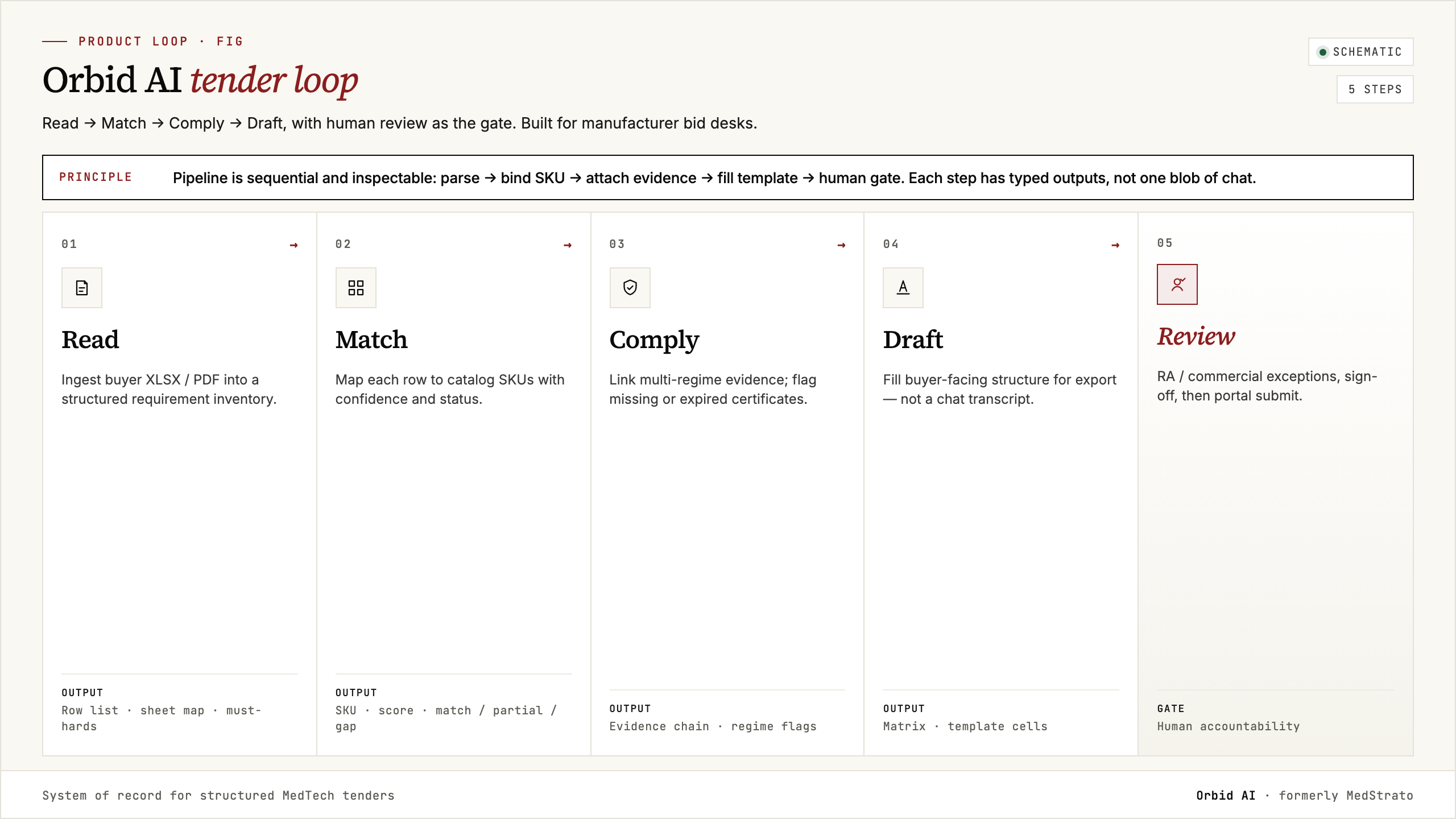
Differenz: bid-nativer Status (SKU + Zertifikat), keine sitzplatzgebundene Answer Library. Match-Geschwindigkeit ist interner Benchmark (oft zehn Sekunden bei sauberem Katalog)—mit Ihren Tenders validieren. Grenzen: kein vollständiges Access-Pricing-Cockpit und kein M365-Bid-Workspace-Ersatz.
Demo mit 2–3 realen Packs · orbid.dev · Features.
2. TenderEyes — MedTech-Collab um Microsoft 365
Tiefe Office-Integration, Knowledge Base, Approvals. Stark, wenn der Engpass Koordination ist; nicht derselbe Job wie zeilenweises Katalog-/Regime-Matching auf schmutzigen Multi-Sheet-Packs.
3. Cube RM — Life-Sciences-Intel und Agent-Suite
Öffentliche Positionierung: Discovery, Prep, KB-Response, Pricing-Simulation, Governance-Agents plus Tender-Intel. Stark für große LS-Portfolios; Device-Dirty-Matrix-Export separat bake-offen.
4–7. CM|XS, AutoRFP.ai, Loopio, Responsive
CM|XS: Full Lifecycle und Compliance-Prozesse. AutoRFP: fragebogenartiger Text, keine Regime-Evidenzkette. Loopio/Responsive: Enterprise-Standard für Q&A/KB—ohne Device-Zeilen-Match und Regime-Status.
Nach Situation wählen
| Situation | Empfehlung |
|---|---|
| Device-Hersteller, Multi-Market Technical Packs | Orbid AI |
| Starke Microsoft-365-Collab-Abhängigkeit | TenderEyes |
| Großes Pharma Intel und Pricing | Cube RM |
| Reifer LS Full Lifecycle | CM|XS |
| Nicht regulierte Text-RFPs | AutoRFP / Loopio / Responsive |
Richtig evaluieren
- 2–3 reale Tenders aus verschiedenen Märkten/Lines
- In Kandidaten-Tools hochladen—wenig „guided demo“
- Messen: Extraction, Zeilen-Match, Evidence-Links, Compliance-Coverage, Exportformat
- Device-Referenzen anfragen
Weiter: Best-of 2026 · Response Automation · 5-Schritte-Guide.
Demo buchen · orbid.dev · Features · /compare.